What Happened When Trump Met Xi and Putin?
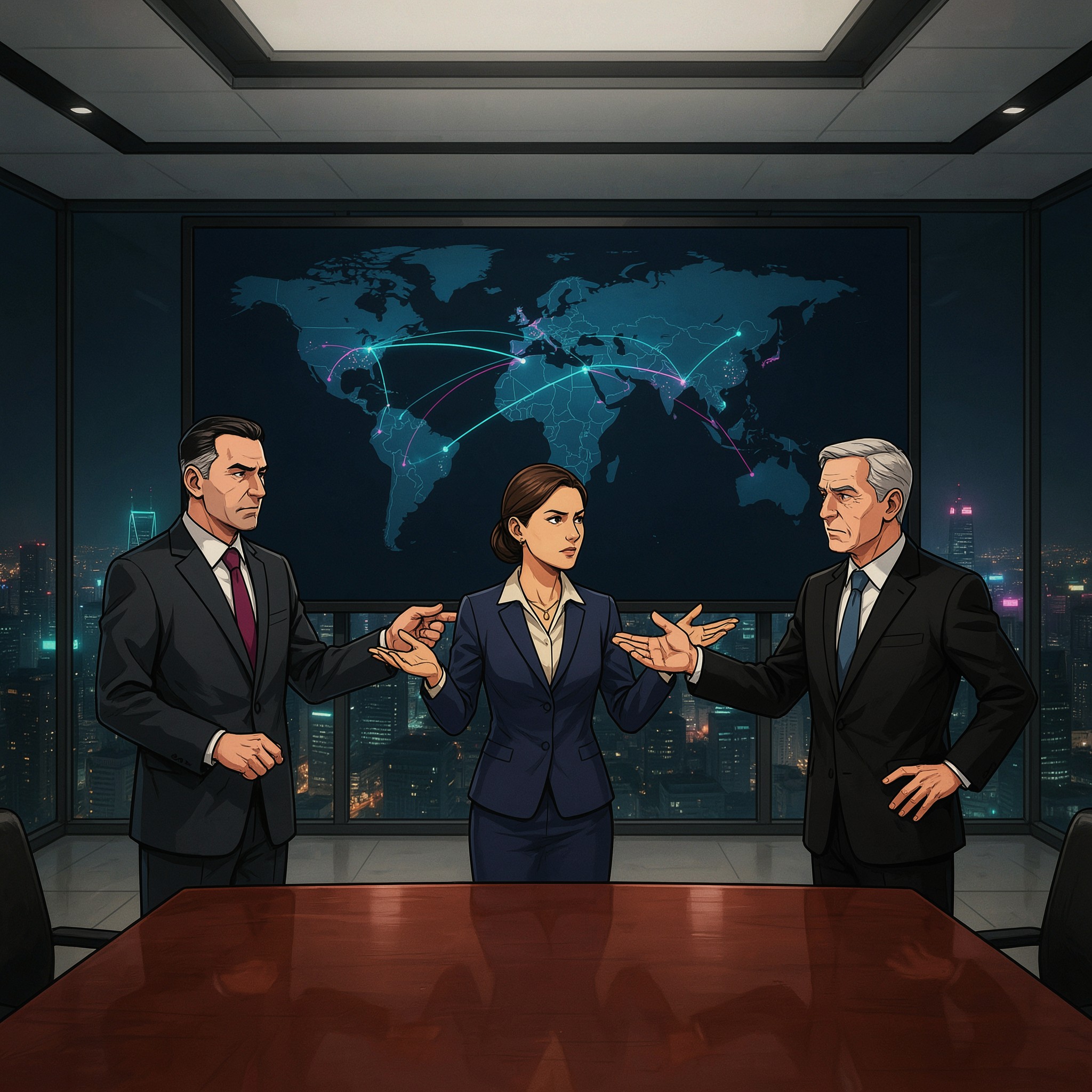
The leaders of the United States, China and Russia sat down together in Shenzhen on November 19, on the sidelines of the APEC summit. It was the first time the three had met as a trio, and the photo opportunity alone probably needed its own trade agreement (Al Jazeera Staff, 2026).
The tone was warm. Trump called Xi a "friend," spoke of a "special relationship" and said the Board of Trade the two agreed to create at their May summit in Beijing had brought balance to the relationship. He said the two countries had split their tariffs in a "fair way." Xi said ties were stable and improving (Al Jazeera Staff, 2026).
The substance was thinner. After Trump's separate meeting with Putin, Kremlin aide Yury Ushakov said no particularly significant statements were made, and analysts expected no major agreements from the three way talks given differences over Ukraine, Iran, nuclear weapons and trade (Al Jazeera Staff, 2026). Deborah Elms of the Hinrich Foundation had set the bar low in advance, saying a handshake without incident would count as a win (Habib, 2026).
How Big Is the US China Trade War Bill?
To see why a calm handshake counts as progress, remember where this started. US tariffs on Chinese goods peaked at 145%, and China retaliated with 125% on American goods. A truce agreed in Busan in October 2025 relaxed those rates, and it has now been extended to January 10, 2027 (Habib, 2026).
| US tariffs on Chinese goods | 145% |
| China's tariffs on US goods | 125% |
The cost of all that whiplash shows up at home. Tariffs have changed more than 50 times in the past two years. They cost each US household about $1,000 in extra taxes last year, before the Supreme Court struck down levies imposed under the IEEPA. The Budget Lab estimates new tariffs will cost at least $900 per household this year, while about $166 billion in tariff refunds is going to companies (Brady, 2026).
That last detail deserves a pause. Companies get refunds, but households already paid through higher prices, which is where most tariff costs land, as we found in who actually pays for tariffs. Nobody is mailing a refund check to your grocery cart.
Who Is Winning the Trade War?
It depends who you ask. Trump says the new Board of Trade has balanced the relationship (Al Jazeera Staff, 2026). Scott Lucas of University College Dublin called Washington's China policy "a disaster" (Habib, 2026).
The scorecard is mixed. Xi agreed to pause new restrictions on some rare earth exports, yet the Center for Strategic and International Studies says China's rare earth exports to the US are still about 75% below normal. Trump relaxed limits on some Nvidia AI chip sales to China, but the Megaspeed scandal over alleged chip diversion has strained ties (Habib, 2026). We covered that story in the Jensen Huang fallout.
Russia adds another twist. China has been Russia's top trading partner since 2022, and Russian oil exports to China rose 35% in the first quarter of 2026, according to a Kremlin aide. A US sanctions bill would impose steep tariffs on buyers of Russian goods, including China. Vuk Vuksanovic of King's College London argues China is "probably the biggest winner" of the wars that distract Washington from Asia (Habib, 2026).
Meanwhile, America's neighbors are not waiting. Canada just cut its own tariff deal with China at the same summit.
The Bill Lands on the Kitchen Table
At the summit, Xi called for free and open trade and criticized unilateralism and protectionism (Brady, 2026). Coming from a country with its own trade barriers, that line got a few raised eyebrows, but the message to the rest of APEC was clear.
The hopeful part is the calendar. A truce that runs to January 10 gives both sides time to turn handshakes into lower prices. Tariffs are announced at summits but paid at checkouts.
Tariffs are announced at summits but paid at checkouts.
What You Can Actually Do About It
Mark January 10, 2027 on your calendar, because that is when the truce could end or be extended. If you run a business that paid tariffs that were later struck down, ask your customs broker whether you are owed a refund. Budget for higher prices on imported goods to continue, and compare prices before big purchases. If you invest, remember that a friendly photo is not a signed agreement. Then ask yourself, who do you think is winning the US China trade war?
References
Al Jazeera Staff. (2026, November 19). Trump meets Putin and Xi ahead of US, Russia, China trilateral talks. Al Jazeera. https://www.aljazeera.com/news/2026/11/19/trump-meets-putin-and-xi-ahead-of-us-russia-china-trilateral-talks
Brady, D. (2026, November 19). The bill for Trump's trade war is coming due—at home and abroad. Fortune. https://fortune.com/2026/11/19/trump-xi-putin-trade-war-shenzen/
Habib, H. (2026, November 19). What do Trump, Putin and Xi want from their Shenzhen meeting? Al Jazeera. https://www.aljazeera.com/news/2026/11/19/what-do-trump-putin-and-xi-want-from-their-shenzhen-meeting
Comments (0)
No comments yet — be the first to comment.
Leave a comment