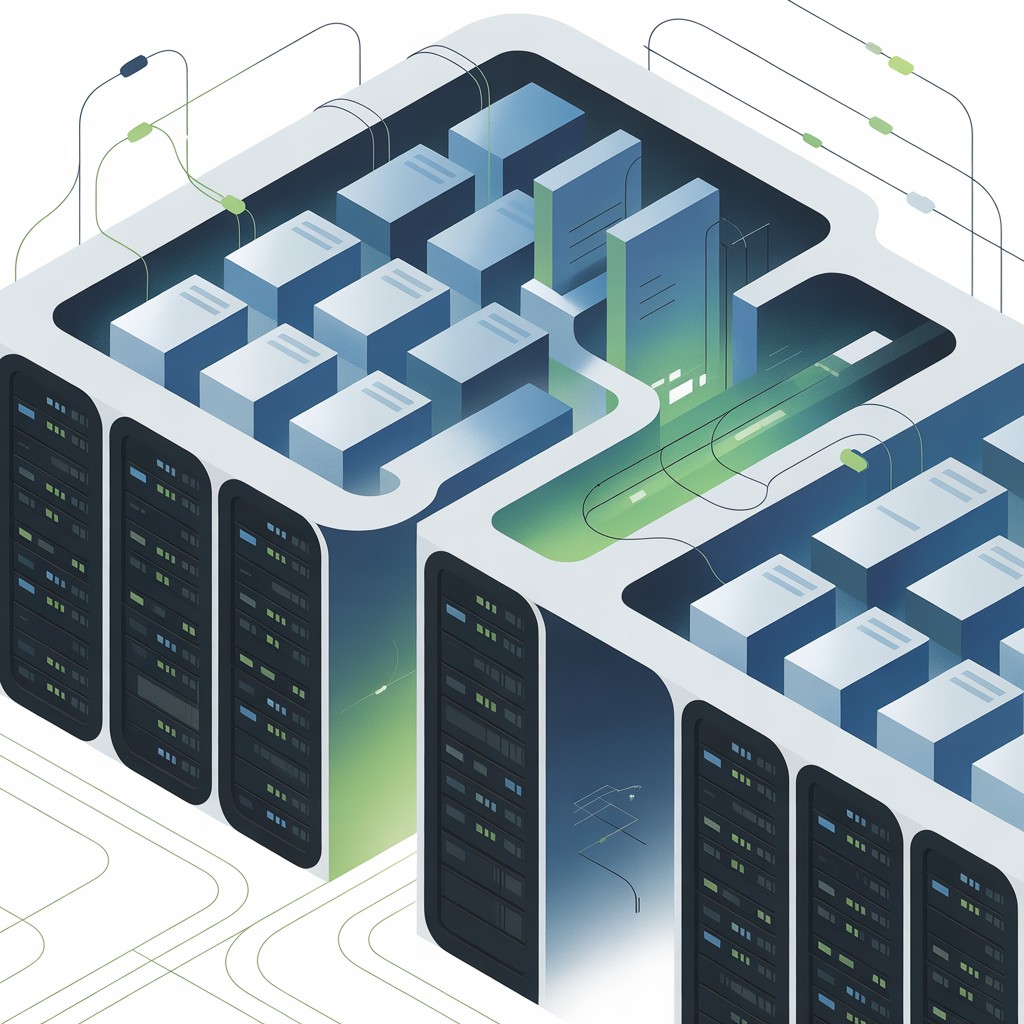
When Google Turns The World Into One Giant Processing Unit
Google continues expanding its global data center footprint as demand for cloud computing, artificial intelligence, and storage accelerates. According to Alphabet's financial disclosures, the company significantly increased capital expenditures in 2024 and 2025 to support new hyperscale facilities across the United States, Europe, and Asia (Alphabet, 2024). These data centers are not just warehouses of servers; they are the digital engines shaping the future of online interaction and AI development.
The Organisation for Economic Cooperation and Development reports that global data usage has more than quadrupled in the last decade due to streaming, cloud services, and automation (OECD, 2024). Google cannot risk falling behind in a world where every second generates more data than entire years did in the past century.
When AI Models Grow So Huge They Need Their Own Cities
Artificial intelligence models are expanding so rapidly that companies need colossal amounts of computing power to train them. According to MIT researchers, modern AI models require exponentially growing compute resources, creating intense pressure on cloud infrastructure (MIT AI Lab, 2024). To stay competitive in the AI race, Google must build new supercomputing clusters capable of supporting neural networks that are increasingly larger, sometimes ten or even 100 times bigger than current models, emphasizing the importance of advanced data center infrastructure.
This is why Google is investing in advanced tensor processing units, liquid cooling systems, and sustainable power solutions. These next-generation data centers are designed not only to handle current AI workloads but also to prepare for models that may be ten or even 100 times larger.
When Digital Infrastructure Becomes A National Asset
Governments increasingly view data centers as strategic investments that support economic resilience. The World Bank highlights that digital infrastructure now contributes to national competitiveness just as much as transportation networks or energy grids (World Bank, 2024). Google's large-scale projects create jobs, spur local investment, support renewable energy partnerships, and promote long-term economic stability.
Google has committed to powering its data centers with renewable energy sources. This includes wind, solar, geothermal, and long-term green power agreements across multiple countries. Sustainability is no longer optional. It is a critical part of Google's infrastructure strategy.
When Outages Remind The World That Resilience Matters
The recent outages involving Cloudflare, Microsoft, and AWS underscored the world's dependence on digital infrastructure. Google investments are a response not only to demand but to the need for redundancy. More data centers mean greater resilience and less risk of catastrophic failures. The International Telecommunication Union warns that centralization without redundancy increases systemic vulnerability (ITU, 2025). Google is determined to avoid becoming the following headline.
When Google Quietly Shapes The Future Of Global Connectivity
Undersea cables, fiber networks, and regional computing hubs form the backbone of Google's global expansion. The company continues to invest in transcontinental cables such as Dunant, Grace Hopper, and Equiano, connecting continents with high-speed fiber. These projects ensure Google can deliver faster services, support international cloud clients, and influence the future of global connectivity.
What This Means For You Right Now
Every search you run, every video you watch, every file you store, and every AI tool you use depends on data centers like the ones Google is building. As these facilities expand, services become faster, more reliable, and cost-effective. For businesses, this means stronger cloud tools; for consumers, a smoother digital experience; and for tech professionals, new opportunities in engineering, networking, and sustainability.
Why Google Data Centers Represent The Future Of The Digital Economy
The world is generating more data than ever before, and Google knows that whoever controls the processing power controls the future. These projects will determine how AI evolves, how cloud computing scales, and how digital services transform over the next decade. Infrastructure is no longer behind the scenes. It is the main stage.
References
Alphabet. (2024). Alphabet Investor Relations Annual Report. https://abc.xyz
International Telecommunication Union. (2025). Digital Infrastructure Stability Findings. https://www.itu.int
MIT AI Lab. (2024). Compute Scaling And Future AI Workloads. https://www.mit.edu
Organisation for Economic Cooperation and Development. (2024). Digital Economy Outlook. https://www.oecd.org
World Bank. (2024). Digital Infrastructure And Global Competitiveness Report. https://www.worldbank.org
Comments (0)
No comments yet — be the first to comment.
Leave a comment