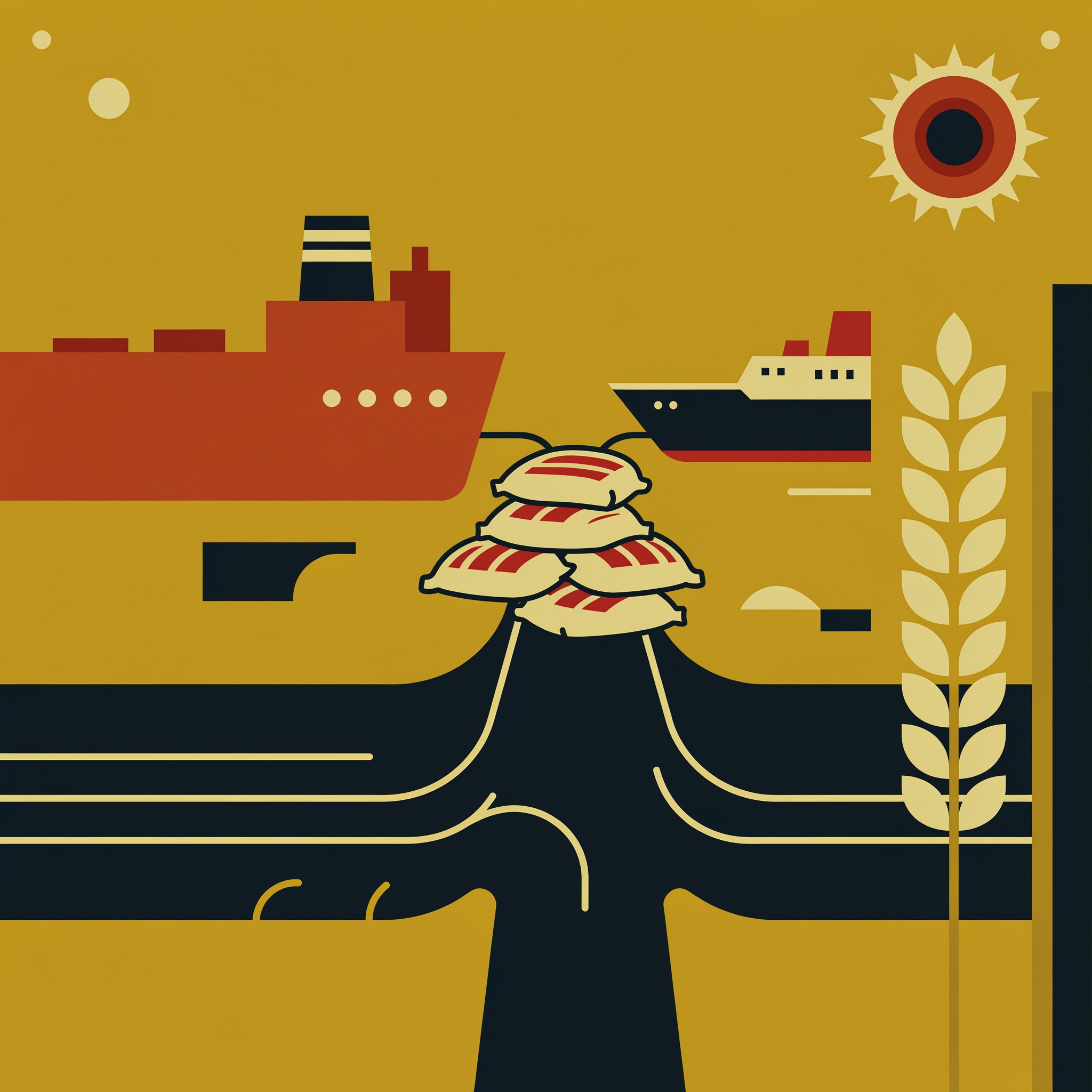
A Very Narrow Door for a Very Large Part of the World
The Strait of Hormuz normally carries about 20 million barrels of oil a day, roughly 35% of global crude oil flows. It also carries about one fifth of global liquefied natural gas and up to 30% of internationally traded fertilizers (Food and Agriculture Organization of the United Nations, 2026).
Then traffic collapsed. Within days of the escalation, tanker traffic fell by more than 90%, and war risk insurance premiums rose from 0.25% to as high as 10% of vessel value (Food and Agriculture Organization of the United Nations, 2026).
| Crude oil flows | 35% |
| Fertilizers (upper estimate) | 30% |
| Liquefied natural gas | 20% |
From Gulf Waters to the Farm Gate
Fertilizer felt it first. Middle East granular urea rose 19% in the first week of March, and Egyptian urea rose 28%. FAO projected global fertilizer prices could be 15% to 20% higher in the first half of 2026 if the crisis persisted (Food and Agriculture Organization of the United Nations, 2026).
The Gulf region also accounts for nearly half of global sulfur trade, which is used to make phosphate fertilizers. FAO Chief Economist Máximo Torero described a dual cost shock, with farmers facing more expensive fertilizer alongside rising fuel costs (Food and Agriculture Organization of the United Nations, 2026).
Planting Less Because Nobody Knows What Comes Next
By October the damage was showing up in prices. Agricultural commodity prices rose 13% in the third quarter, and further increases are expected (Modern Diplomacy, 2026).
Initial fertilizer and fuel stocks softened the impact, but long term uncertainty has led to cautious planting and less fertilizer use. Higher fuel costs are also hitting harvesting, and El Niño and Black Sea wheat supply problems are piling on (Modern Diplomacy, 2026).
The report warns of a possible food security crisis in parts of Asia and Africa if no UN backed fertilizer shipping plan is agreed soon. Behind it all, Iran is trying to control the strait to pressure Washington, while the United States enforces a naval blockade of Iranian ports (Modern Diplomacy, 2026).
A little perspective helps. In March, FAO's Food Price Index was still about 21% below its March 2022 peak (Food and Agriculture Organization of the United Nations, 2026). Food prices do not come from the supermarket, they come from a long chain that starts with a bag of fertilizer.
Food prices do not come from the supermarket, they come from a long chain that starts with a bag of fertilizer.
What You Can Actually Do About It
Plan your meals, cut food waste, and compare unit prices instead of reaching for the usual brand. Buy seasonal food, keep a modest stock of non perishables without hoarding, and support a local food bank if you can. Watch staples like wheat and rice for price shifts. Then ask yourself, if grocery prices jumped this winter, which food would you cut back on first?
References
Food and Agriculture Organization of the United Nations. (2026, March 26). FAO chief economist warns of severe global food security risks from disruption to Strait of Hormuz trade corridor. FAO. https://www.fao.org/newsroom/detail/fao-chief-economist-warns-of-severe-global-food-security-risks-from-disruption-to-strait-of-hormuz-trade-corridor/en
Modern Diplomacy. (2026, October 15). Hormuz crisis threatens global food supplies as shipping disruptions hit harvests. Modern Diplomacy. https://moderndiplomacy.eu/2026/10/15/hormuz-crisis-threatens-global-food-supplies-as-shipping-disruptions-hit-harvests/


Comments (0)
No comments yet — be the first to comment.
Leave a comment