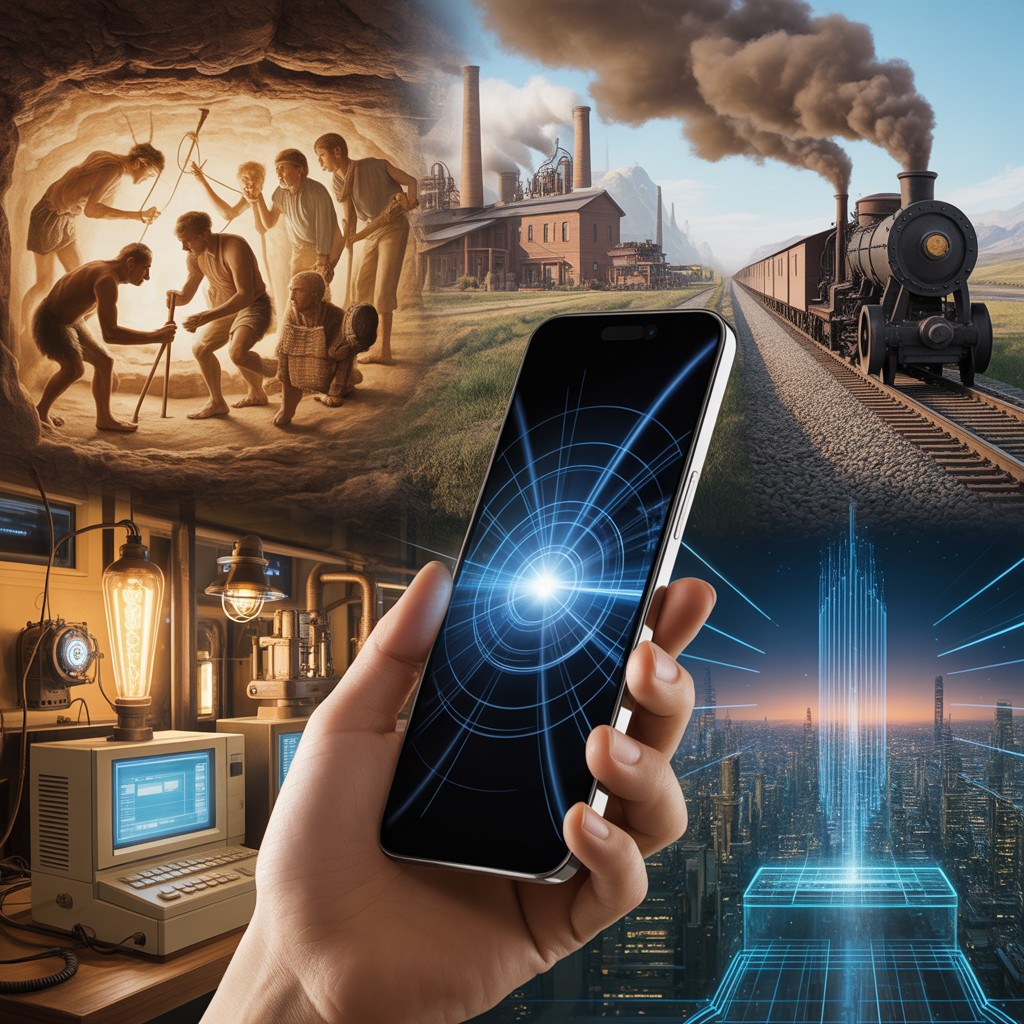
When steam placed the world on fast forward
Once the steam engine arrived, the world stopped crawling and started sprinting. Machines replaced physical labor. Factories grew. People left rural living for city life. Transportation spread farther than anyone thought possible. It was messy, loud, and groundbreaking. The first industrial revolution took humanity from manual survival to organised production. Steam did not simply move trains. It moved society forward, whether society was ready or not.
When electricity lit the room and the human imagination
The second industrial revolution arrived with bright sparks of electricity. Homes lit up. Streets came alive. Mass production became smoother and far more efficient. Communication expanded through telegraphs and telephones. Gordon (2016) notes that electricity gave humanity control over time, enabling work and productivity to extend beyond daylight hours. This period changed expectations of comfort, safety, and productivity.
When computers entered the conversation and refused to leave
The third industrial revolution introduced computers that could store data, calculate at impossible speeds, and perform tasks far beyond human capacity. People gained email, the early internet, and a brand new digital identity. Machines became partners rather than tools. This was the moment when humans began asking if machines could think and whether they should.
When artificial intelligence became the unpredictable overachiever
The fourth revolution brings artificial intelligence, cloud computing, robotics, and quantum exploration. Machines now recognise images, speak languages, detect fraud, and predict behaviour. They even write essays that suspiciously sound human. Artificial intelligence does not replace the human mind. It extends it. It amplifies the same curiosity that started the first spark thousands of years ago.
What this means for you right now
If you ever wondered why your phone feels smarter than your childhood math teacher or why the world seems to shift every few years, it is because you are living in a constant upgrade cycle. Each industrial revolution quietly changed daily life, and the current one is doing it loudly. Understanding these revolutions helps you navigate financial choices, career decisions, and personal growth. If you know where technology came from, you can predict where it is going and position yourself to benefit rather than struggle. It is not about becoming a tech expert. It is about recognising that every revolution made life easier for people who paid attention.
The lesson every era keeps teaching
Technology was never only about machines. It is about imagination. Every revolution was built by people who questioned limits and challenged comfort. New inventions always feel intimidating at first, but they eventually become normal. The same will happen with artificial intelligence and every innovation that follows. As long as curiosity exists, progress will continue. Humanity will keep moving forward, one breakthrough at a time.
References
Gordon, R. (2016). The rise and fall of American growth. https://press.princeton.edu
Harari, Y. (2015). Sapiens. https://harpercollins.com
Comments (0)
No comments yet — be the first to comment.
Leave a comment