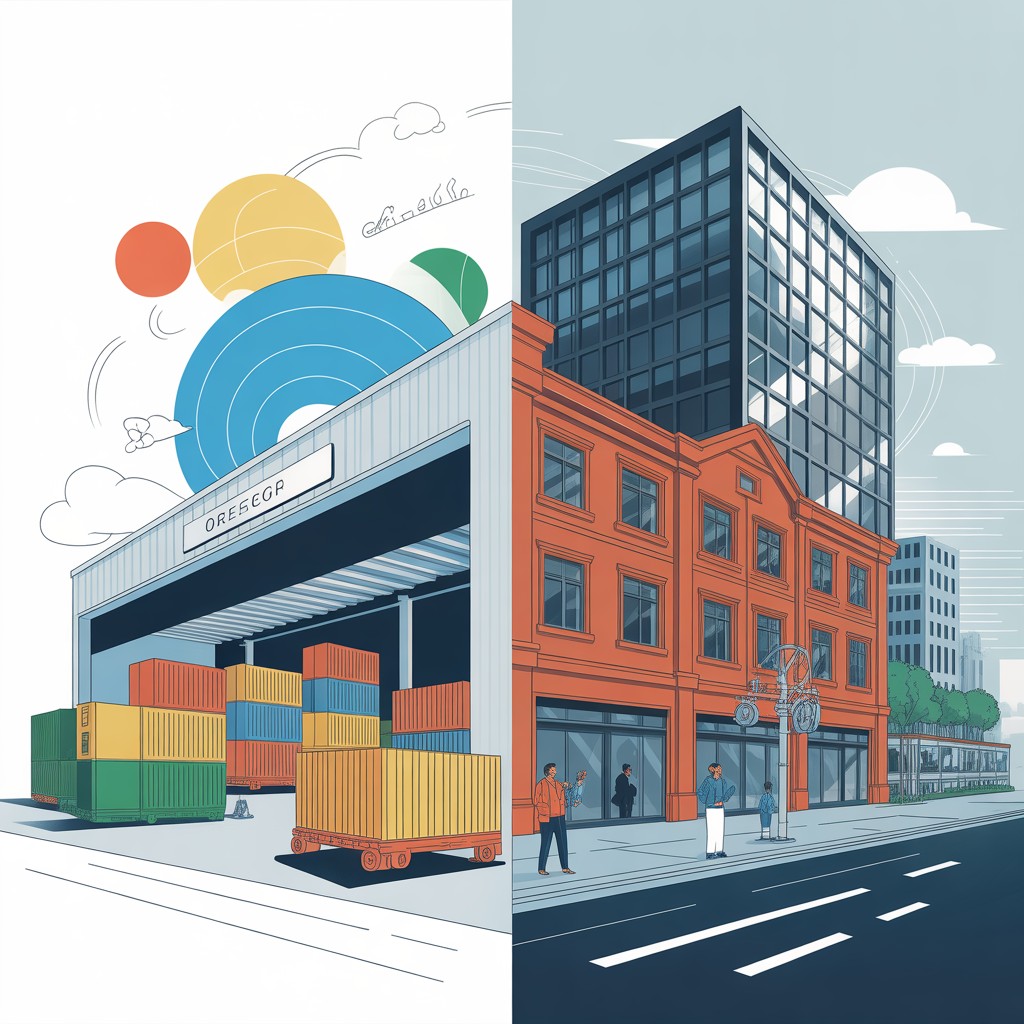
When Offices Lose Tenants And Warehouses Gain Influence
Office buildings were once the crown jewel of commercial real estate. Today, they face the slow decline produced by remote work, cost-cutting, and shifting corporate priorities. Companies prefer flexible spaces and hybrid schedules that reduce operational expenses.
In contrast, warehouses are enjoying the most profitable moment in their history. E-commerce needs storage. Retailers need distribution. Manufacturers need inventory hubs.
The World Economic Forum states that logistics real estate is expanding faster than any other sector because global delivery expectations have skyrocketed (World Economic Forum, 2024).
This trend is not a temporary pandemic effect. It is structural.
When Commercial Real Estate Splits Into Winners And Losers
The last three days strengthened a trend that analysts predicted months ago. Offices continue to face:
- Lower occupancy
- Rising maintenance expenses
- Costly upgrades for tenant attraction
- Reduced renewal commitments
Meanwhile, logistics properties enjoy:
- Near record occupancy
- Increasing rents
- Strong investor interest
- Rising land competition
This divergence is reshaping how investors and developers allocate capital, with many prioritizing logistics real estate due to its resilience and growth potential, such as increased demand for distribution centers near urban areas.
The International Monetary Fund reports that logistics real estate remains resilient even amid economic uncertainty because supply chain operations cannot be slowed (International Monetary Fund, 2024).
When Demand For Fast Delivery Drives Warehouse Expansion
The growth of e-commerce is the most significant force behind the warehouse boom. Consumers now expect faster shipping, same-day delivery, and transparent tracking, prompting companies to build storage networks closer to cities to meet these demands.
The Organisation for Economic Cooperation and Development highlights that urban distribution centers increase economic efficiency and reduce transport times for retailers and online platforms (Organisation for Economic Cooperation and Development, 2024).
Warehouses are no longer industrial leftovers. They are essential infrastructure.
When Cities Adapt Their Planning To The New Reality
Major cities are adjusting zoning laws to support warehouse construction closer to residential and urban centers. This is particularly evident in regions with high retail activity and tech-driven logistics networks.
MIT research shows that cities that embrace logistics-oriented zoning experience better supply chain performance and more resilient local economies (MIT Work And Innovation Study, 2024).
This is creating new industrial clusters and expanding the value of land that was once overlooked.
When Office Buildings Face A Long Road To Recovery
Office demand will require years to stabilize. Many companies prefer hybrid work, smaller footprints, and flexible leases.
Renovating older office buildings has become costly because tenants want modern layouts, collaborative zones, and digital connectivity.
The World Bank states that office markets may need structural adaptation, including repurposing specific spaces for mixed-use, residential conversion, or flexible workspace solutions (World Bank, 2024).
This transition will require patience, investment, and new thinking.
What This Means For You Right Now
If you invest in commercial properties, logistics real estate offers stronger growth and more predictable returns. If you are a developer, warehouse projects may deliver faster absorption and higher demand than office towers. If you manage office space, prepare for new leasing strategies and long-term repositioning.
The commercial market is changing shape, and everyone must adjust accordingly.
Why Warehouses Will Define The Future Of Commercial Investment
Logistics real estate reflects changing household and business behavior. The world shops online, operates globally, and demands speed.
Warehouses are the backbone of that system.
Office buildings will recover eventually, but they will never regain their former dominance.
The future belongs to real estate that supports the modern economy.
References
International Monetary Fund. (2024). Industrial Real Estate And Global Demand Study. https://www.imf.org
MIT Work And Innovation Study. (2024). Corporate Work Patterns And Real Estate Transformation. https://www.mit.edu
Organisation for Economic Cooperation and Development. (2024). Logistics Integration And Economic Development Report. https://www.oecd.org
World Bank. (2024). Urban Planning And Commercial Space Adaptation Study. https://www.worldbank.org
World Economic Forum. (2024). Commercial Real Estate And Global Supply Chain Outlook. https://www.weforum.org
Comments (0)
No comments yet — be the first to comment.
Leave a comment