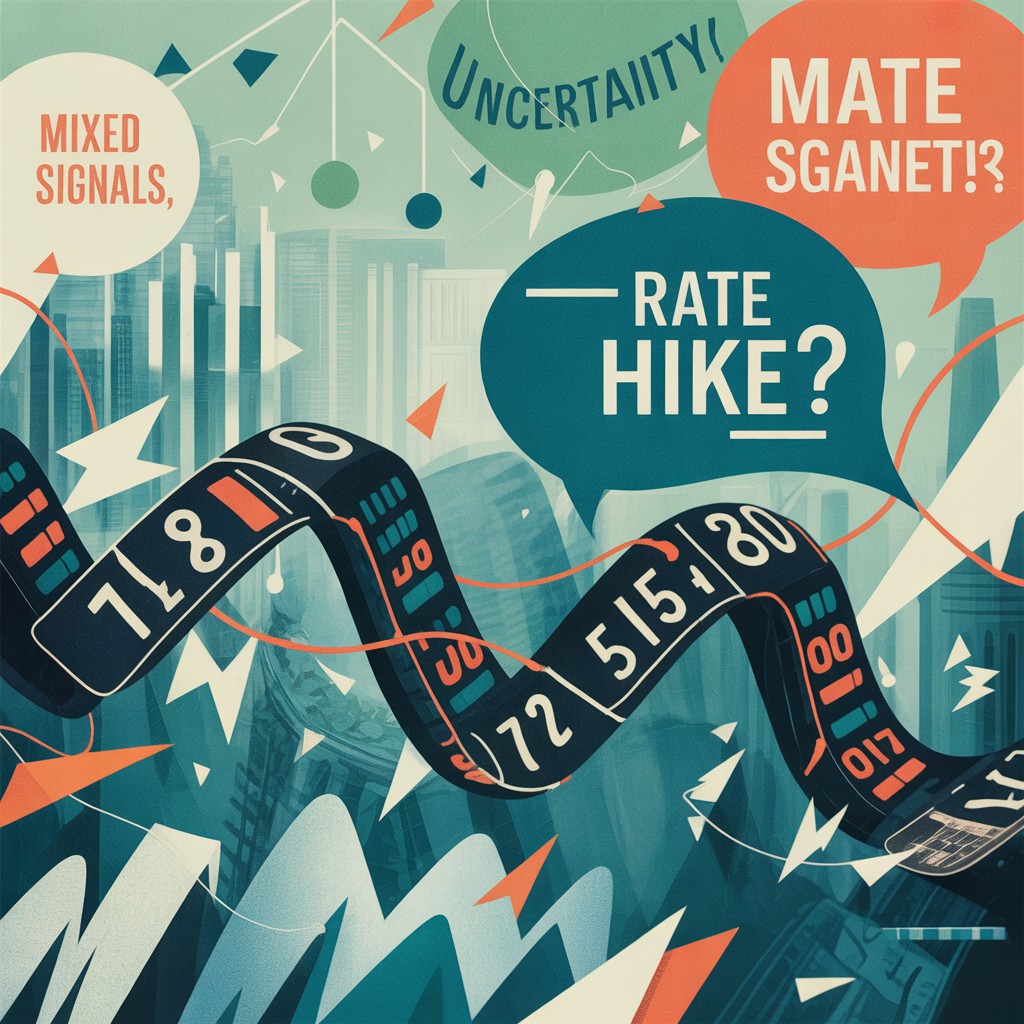
When Inflation Pretends To Calm Down But Still Starts Arguments
Inflation trends over the past three days have created a clear sense of confusion across markets. The United States shows cooling inflation in goods but persistent high prices in services, while European inflation has slowed faster in some economies but remains sticky in others, illustrating the complexity investors face.
According to the International Monetary Fund, inflation cycles do not move uniformly because different sectors normalize at various speeds (IMF, 2024). This is why investors are having a harder time interpreting markets than reading a text message with no punctuation.
When Bond Yields Start Behaving Like Overcaffeinated Stock Traders
Bond yields reacted to mixed inflation data with a dramatic jump, then a pullback, then another jump. This volatility stems from investor uncertainty about whether the United States Federal Reserve will cut rates earlier, later, or not at all.
The Organisation for Economic Cooperation and Development notes that bond markets often “price in” expected central bank decisions before they occur, leading to sudden swings when data contradict those expectations (OECD, 2024). In other words, markets are acting as if they are trying to read the Federal Reserve's mind while blindfolded.
When Central Banks Keep Giving Speeches That Say Everything And Nothing
In the last seventy-two hours, policymakers from both the European Central Bank and the Federal Reserve issued statements that expressed “patience,” “flexibility,” and “data dependence.” These vague terms help them avoid committing to anything firmly.
The World Bank has described this communication style as intentional ambiguity designed to prevent panic in markets during transition periods (World Bank, 2024). Investors interpret these comments differently, which is why volatility rises whenever a policymaker begins speaking.
When Stocks React Emotionally Because They Always Do
United States and European equities opened strongly, then dipped sharply before rebounding. Tech stocks seem optimistic about rate cuts, while financials appear concerned about margin compression. Energy stocks are stuck in the middle, depending on commodity movements.
Sectors that rely on consumer spending, such as retail, remain fragile because inflation uncertainty translates into unpredictable demand. Analysts at MIT Sloan point out that consumer psychology now plays a larger role in inflation cycles, as households adjust spending in response to perceived price uncertainty (MIT Sloan, 2024).
When Investors Realize The Only Predictable Thing Is Unpredictability
Three days of mixed inflation data demonstrate that the global economy is still transitioning out of the post-pandemic cycle. Supply chains are normalized, but wages, housing costs, and services remain elevated. This unevenness creates conflicting signals across indicators.
Financial markets love clarity. Instead, they are receiving riddles.
What This Means For You Right Now
If you are an investor, expect volatility in equities and bonds until inflation data stabilizes. If you are planning large purchases, interest rate uncertainty suggests caution before locking in long-term loans. If you manage a portfolio, diversify across sectors that perform well in both easing and tightening cycles.
The next few weeks will be critical in determining whether recent inflation readings will lead central banks to cut rates or hold off longer. This uncertainty will continue to influence market sentiment and investor strategies.
Why This Inflation Moment Matters
Mixed inflation is not just a number on a report. It shapes mortgage rates, job markets, business expansion, consumer prices, and investor confidence. The past three days show that the global economy is still moving through a transition period. Understanding these shifts helps investors prepare for upcoming policy moves and market behavior.
References
International Monetary Fund. (2024). Global Inflation Dynamics Report. https://www.imf.org
MIT Sloan School of Management. (2024). Consumer Behavior And Inflation Expectations Study. https://mitsloan.mit.edu
Organisation for Economic Cooperation and Development. (2024). Monetary Policy And Financial Markets Outlook. https://www.oecd.org
World Bank. (2024). Global Economic Stability And Policy Communication Review. https://www.worldbank.org
European Central Bank. (2024). Monetary Update And Price Stability Briefing. https://www.ecb.europa.eu
Comments (0)
No comments yet — be the first to comment.
Leave a comment