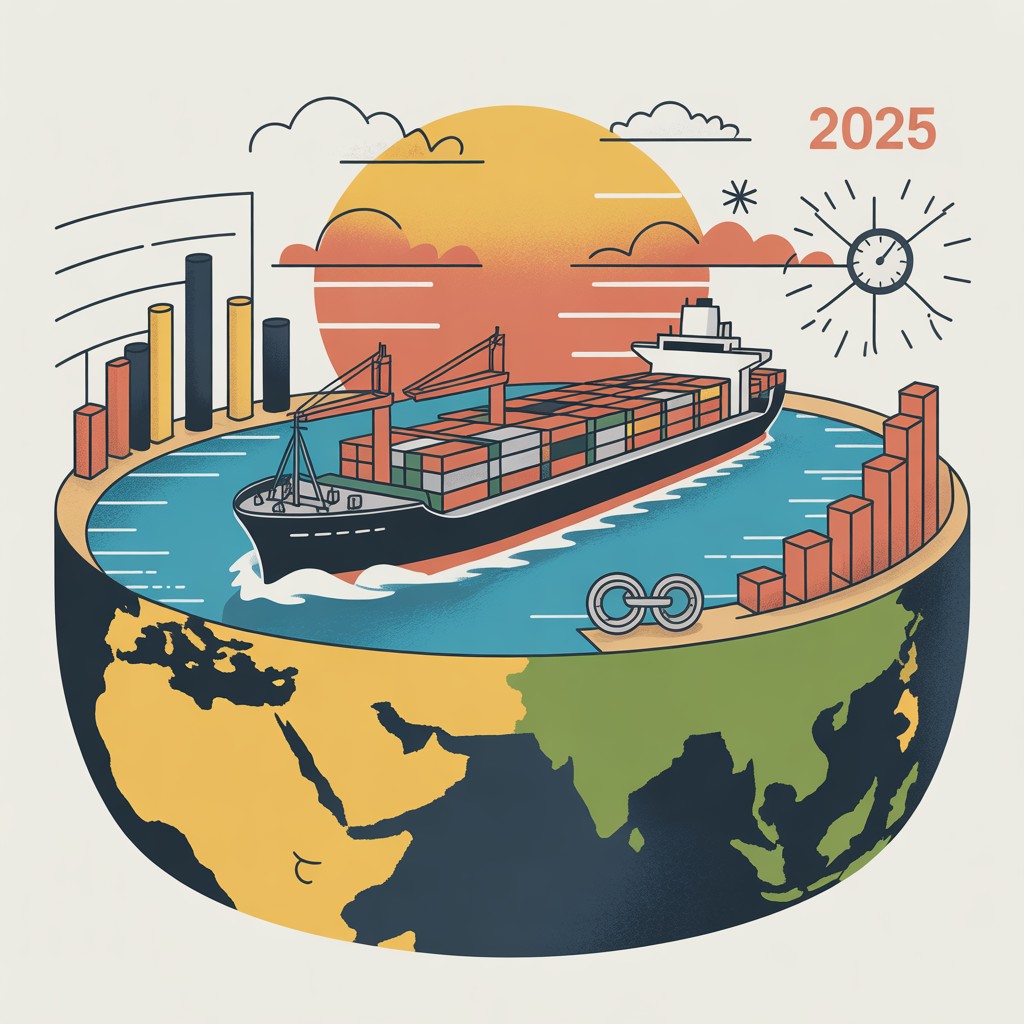
When The Red Sea Turns Into The Most Stressful Waterway On Earth
The Red Sea and Suez Canal handle a significant portion of global trade, transporting goods, energy supplies, machinery, electronics, and consumer products between Asia, the Middle East, Europe, and North America, making their stability crucial for worldwide commerce.
Recent instability forced shipping companies to bypass the region. That rerouting adds days or weeks to delivery times, increasing fuel use, insurance costs, and operational risk.
According to the World Bank, disruptions to strategic maritime corridors significantly raise costs and weaken global trade competitiveness (World Bank, 2024).
When Shipping Costs Climb And Businesses Start Recalculating Their Entire Strategy
The past few days brought sharp increases in global shipping fees. Businesses are responding with early pricing adjustments, shipping delays, or alternative sourcing.
This matters because shipping affects almost every aspect of the global economy.
Cost increases appear in:
- Imported food and retail products
- Manufacturing materials
- Automotive parts
- Energy and chemical shipments
- Technology hardware
The International Monetary Fund warns that shipping cost spikes contribute directly to global inflation because transportation feeds into every supply chain (International Monetary Fund, 2024).
When Supply Chains Realize Recovery Is Still A Work In Progress
Supply chains have barely recovered from pandemic-era turmoil. Ports have improved efficiency, but global trade routes remain vulnerable, with the Red Sea crisis serving as a reminder that resilience is essential, not optional.
The Organisation for Economic Cooperation and Development explains that modern supply chains depend on complex networks, so even a minor disruption creates domino effects for months (Organisation for Economic Cooperation and Development, 2024).
Companies are now updating contingency plans because the last three days of news show that risk never completely disappears.
When Technology Becomes The Shock Absorber For Global Logistics
To manage uncertainty, companies are turning to digital tools. Artificial Intelligence engines forecast delays. Route optimization systems identify safer alternatives. Real-time tracking platforms help companies warn customers before disruptions escalate.
Research from MIT shows that digital logistics platforms can reduce uncertainty and mitigate cost shocks when transportation networks face instability (MIT Logistics Study, 2024).
Technology does not eliminate risk, but it helps global trade breathe more calmly.
When Emerging Economies Feel The Pain First
Rising shipping costs are harrowing for developing economies. These countries depend heavily on affordable imports and competitive exports.
The United Nations Trade Forum warns that prolonged shipping disruptions can widen the development gap because smaller economies lack bargaining power and cannot easily redirect trade routes (United Nations Trade Forum, 2024).
Countries with fragile food supply chains or limited manufacturing capacity face immediate consequences.
What This Means For You Right Now
If you run a business, expect fluctuating delivery schedules and possibly higher input costs. If you work in procurement or logistics, review supplier diversity, shipping alternatives, and inventory buffers. If you are a consumer, understand that price increases are likely driven by transportation costs, not just retailers.
The global trade system is adjusting in real time. Those who stay informed will adapt faster than those who wait until it's too late.
Why The Red Sea Crisis Will Define Trade Conversations In 2025
Maritime routes are the veins of global commerce. When one artery becomes blocked or risky, the entire global economy feels the pressure. This year will bring new strategies, new alliances, and new technologies designed to protect trade routes from geopolitical instability.
The Red Sea is not just a shipping corridor. It is a reminder that global trade depends on peace, predictability, and open infrastructure.
References
International Monetary Fund. (2024). Global Trade Stress And Inflation Report. https://www.imf.org
MIT Logistics Study. (2024). Artificial Intelligence And Predictive Supply Chains. https://www.mit.edu
Organisation for Economic Cooperation and Development. (2024). Supply Chain Vulnerability Study. https://www.oecd.org
United Nations Trade Forum. (2024). Impact Of Shipping Instability On Emerging Economies. https://www.un.org
World Bank. (2024). Global Shipping Route Crisis Analysis. https://www.worldbank.org
Comments (0)
No comments yet — be the first to comment.
Leave a comment