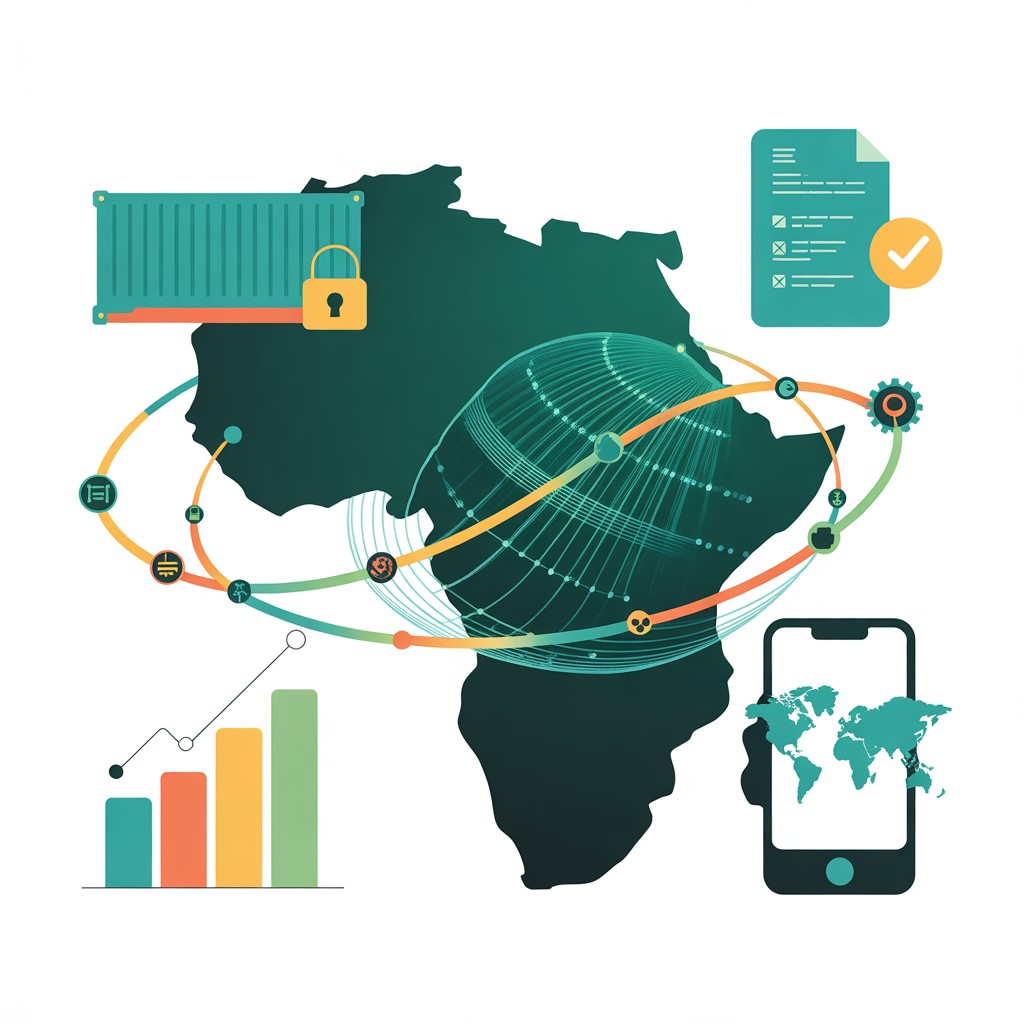
When Single Window Systems Become The New Backbone Of Border Management
Single-window systems allow traders to submit all customs documentation through a single digital portal. Instead of visiting multiple offices or navigating complex paper procedures, businesses can handle clearance through a single portal.
This improves transparency, reduces opportunities for corruption, and eliminates repetitive steps that previously slowed shipments. The Organisation for Economic Cooperation and Development explains that single-window systems increase trade efficiency and reduce clearance times by more than 50% in some regions (Organisation for Economic Cooperation and Development, 2024).
When Africa Starts Setting An Example For Trade Digitalization
Countries like Kenya, Rwanda, Ghana, Nigeria, and South Africa are advancing digital customs systems that rival those in Europe and Asia. Many nations implemented automated risk management tools, digital permits, electronic cargo tracking, and online tax verification. These developments are not isolated innovations. They are part of a coordinated policy push toward regional integration.
The African Continental Free Trade Area emphasizes digitalization as a core pillar of regional trade growth (African Union, 2024). The goal is to create a seamless trade environment across dozens of markets, supported by technology instead of paper.
When Technology Finally Makes Borders Less Complicated
Artificial Intelligence-powered risk analysis tools are helping customs agencies identify high-risk cargo while speeding up low-risk shipments. Blockchain-based verification increases document authenticity. Mobile inspection devices reduce border delays.
MIT researchers argue that automated border systems reduce human error, increase transparency, and improve government revenue collection (MIT Trade Automation Research, 2024).
Technology is becoming a practical solution rather than a theoretical luxury.
When Global Supply Chains Begin To Notice Africa's Improvement
As digital systems become more reliable, international companies view African economies as more attractive for manufacturing, warehousing, and distribution. Improved customs performance speeds up export cycles and lowers the cost of importing machinery and components.
The International Monetary Fund notes that digitalization of trade in Africa could significantly increase intra-regional exports and attract foreign investment in technology-driven industries (International Monetary Fund, 2024).
What This Means For You Right Now
If you are a business operating in Africa, you will benefit from faster border clearance and fewer administrative delays. If you are an importer or exporter outside Africa, new opportunities are emerging as supply chains diversify. With improved transparency and reduced clearance times, trade becomes less risky and more predictable. Digital customs systems will reshape how the world views African trade capacity.
Why Africa Digital Trade Integration Is A Global Turning Point
Africa's strategic leap into advanced digital trade platforms exemplifies a shift from traditional frameworks, positioning the continent as a catalyst for global trade system modernization and regional cooperation.
The future of trade will not be built only by large economies. It will be shaped by regions willing to modernize boldly. Africa is proving that modernization can be fast, strategic, and transformative.
References
African Union. (2024). African Continental Free Trade Area Digital Integration Brief. https://au.int
International Monetary Fund. (2024). Trade Digitalization And Growth In Emerging Markets. https://www.imf.org
MIT Trade Automation Research. (2024). Border Technology And Customs Efficiency Study. https://www.mit.edu
Organisation for Economic Cooperation and Development. (2024). Trade Facilitation And Digital Customs Report. https://www.oecd.org
World Bank. (2024). Digital Customs And Regional Integration Analysis. https://www.worldbank.org
Comments (0)
No comments yet — be the first to comment.
Leave a comment