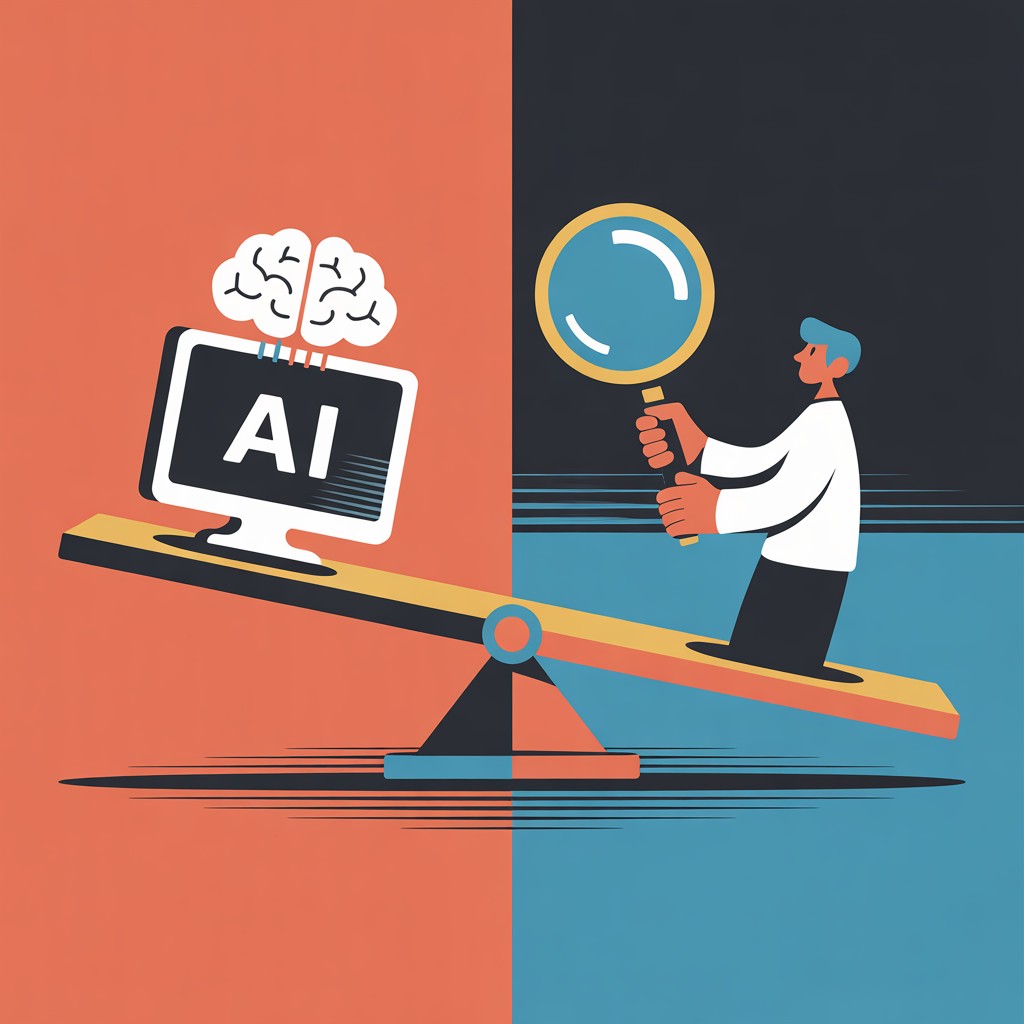
When AI Tries To Understand Finance And Realizes Humans Are Wild And Unpredictable
Financial models depend on probability, behavioral patterns, macroeconomic indicators, and an uncomfortable amount of human emotion. Artificial intelligence excels at detecting patterns in structured data and identifying anomalies. According to the International Monetary Fund, machine learning systems can significantly improve risk modeling, credit scoring, and fraud detection by analyzing massive datasets at high speed and with high accuracy (IMF, 2024). However, financial markets often behave irrationally, which challenges AI's ability to generalize from past data.
When AI Hits Its Limits And Learns That Markets Do Not Follow The Rules
Machine learning systems can produce highly accurate predictions during stable market periods. Yet during volatility or unexpected events, such as [specific recent event], they can misinterpret signals. The Organisation for Economic Cooperation and Development notes that AI struggles with tail-risk events because these situations are rare, nonlinear, and challenging to represent in training data (OECD, 2024). Market crashes, sudden policy announcements, geopolitical conflicts, and speculative bubbles often confuse algorithmic models, underscoring the need for human judgment.
This creates a paradox. AI is powerful, but only when the world behaves predictably. The problem is that the world rarely behaves predictably.
When Human Judgment Still Matters Even If AI Wants To Take The Wheel
Despite rapid advancements, AI cannot fully replace domain expertise. Financial decisions require context, intuition, and interpretation of qualitative information. A World Bank report highlights that AI must be paired with human oversight to avoid misclassification, bias reinforcement, and systematic errors (World Bank, 2024). Human analysts understand political nuance, regulatory changes, and psychological factors that data often fails to capture, emphasizing the ongoing need for human involvement in financial modeling.
AI can support financial modeling, but cannot autonomously manage portfolios responsibly. Human-in-the-loop systems remain essential.
When AI Shows Real Promise And Could Transform The Future Of Finance
AI training can drastically improve model calibration. By quickly processing large datasets, identifying hidden correlations, and generating scenario simulations, AI enhances traditional econometric techniques. MIT researchers demonstrate that reinforcement learning systems can simulate market strategies and evaluate portfolio resilience under different conditions (MIT Finance Lab, 2024).
Artificial intelligence also excels at automating repetitive tasks such as data cleaning, forecasting updates, and risk scoring. These efficiencies improve decision-making and allow analysts to focus on strategic planning.
When Ethical And Practical Challenges Make Everything Even More Complicated
AI-driven financial modeling raises concerns around fairness, transparency, and accountability. If models use biased or incomplete datasets, they may produce discriminatory outcomes. The United Nations Development Programme emphasizes that AI systems in finance must adhere to governance frameworks to ensure ethical and equitable outcomes (UNDP, 2024).
Practical challenges also exist. AI systems require tremendous computing power, high-quality data, and constant retraining. These investments are expensive and require specialized expertise.
What This Means For You Right Now
AI will reshape financial modeling, but do not fire your human analysts yet. The most reliable systems combine machine speed with human judgment. If you work in finance, learning AI tools will make you more competitive. If you invest, understand that AI can provide insights but cannot guarantee perfect predictions. For policymakers, governance and oversight will be crucial to avoid systemic risk. Recognizing AI's limitations is essential for making informed decisions in this evolving landscape.
Why AI In Finance Is Both Feasible And Fantastically Complicated
Artificial intelligence is not a magic oracle. It is a powerful tool that enhances financial modeling but cannot replace the human capacity to understand nuance, emotion, and irrational behavior. The future of finance will be a partnership between human expertise and machine intelligence, where each complements the other's strengths to improve decision-making and risk management.
References
International Monetary Fund. (2024). Technology And Financial Stability Review. https://www.imf.org
MIT Finance Lab. (2024). AI-Driven Risk Modeling Research. https://www.mit.edu
Organisation for Economic Cooperation and Development. (2024). AI And Systemic Risk Report. https://www.oecd.org
United Nations Development Programme. (2024). AI Governance And Ethical Finance. https://www.undp.org
World Bank. (2024). Machine Learning And Financial Inclusion Overview. https://www.worldbank.org
Comments (0)
No comments yet — be the first to comment.
Leave a comment